
Fence Staining & Sealing in Birmingham, AL
Birmingham Fence Pros stains and seals wood fences across Birmingham. Alabama's humidity, summer sun, and year-round rain are tough on bare wood. An unprotected pine fence turns gray, cracks, and grows mildew within a few seasons. Staining slows all of that down and makes the fence look new again.
What Weather Does to a Wood Fence Here
- Moisture: rain spread throughout the year plus humid summers mean wood stays damp for long stretches. Damp wood swells, shrinks, and checks (cracks along the grain).
- Sun: UV breaks down the surface fibers and turns wood gray.
- Mildew and algae: shady fence lines, especially on the north side of a yard or under big oaks, turn green and black.
- Freeze nights: Birmingham gets dozens of freezing nights a year, and water trapped in wood expands and opens cracks wider.
A good stain blocks water, filters UV, and resists mildew. It won't stop wood from aging forever, but it slows it down a lot.
Our Staining Process
- Inspect and repair. Loose boards get re-fastened, popped nails reset, and broken pickets replaced before we stain. There's no point coating a board that's about to fall off. See fence repair.
- Clean. A wood cleaner and low-pressure rinse remove dirt, mildew, and gray surface fibers. High pressure can fuzz and gouge soft pine, so we keep it gentle.
- Brighten. A wood brightener restores the wood's natural color after cleaning and helps stain soak in evenly.
- Dry. Wood needs to dry before stain goes on. In humid weather that can take a couple of days.
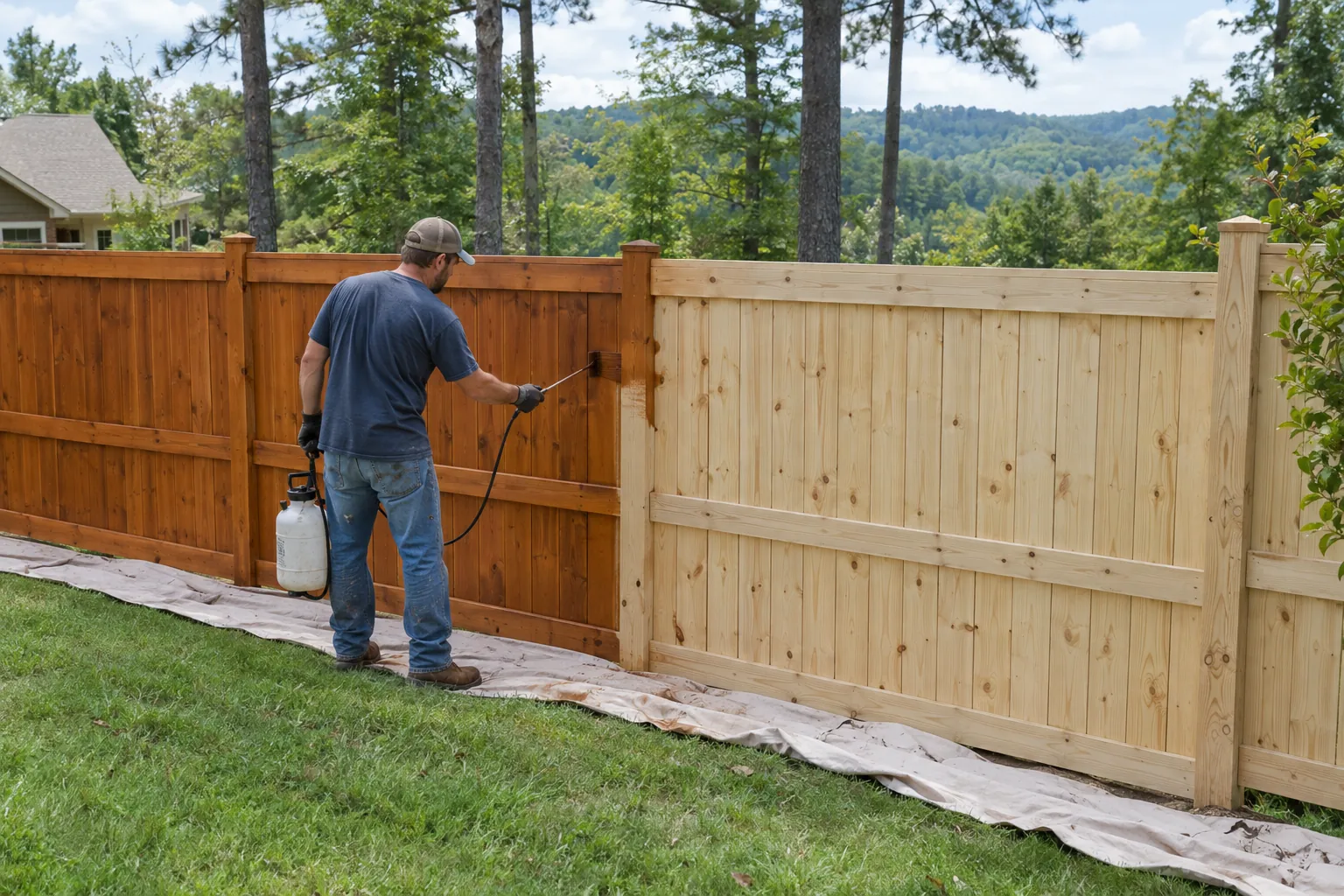
- Protect the surroundings. Plants, siding, patios, and cars get covered.
- Apply. We spray and back-brush so stain gets into the grain and the gaps between boards, then even out drips and lap marks.
Planning a fence? Free estimates across Birmingham and nearby cities.
Choosing a Stain
Transparent and clear sealers
Show the most wood grain but offer the least UV protection, so they need recoating more often.
Semi-transparent
The most common choice. Adds color, shows grain, and blocks more UV. Cedar, redwood, and brown tones are popular, as are grays for modern looks.
Solid stain
Looks closer to paint, hides older and mismatched wood, and offers the most UV protection. A good way to refresh an older fence that has a mix of new and weathered boards.
Oil-based vs. water-based
Oil-based stains soak deep into the wood. Water-based stains dry faster and clean up easier. Both work when applied properly; the choice depends on the wood, its age, and what was used before.
When to Stain a New Fence
New pressure-treated pine is often wet from the treatment process. Staining it right away traps the moisture and the stain won't absorb. Most new treated fences need several weeks to a few months to dry out, depending on the weather. A simple test: sprinkle water on a board. If it beads, wait. If it soaks in, it's ready. Cedar is usually ready sooner.
How Often to Restain
It depends on sun, shade, and stain type, but many fences here need a fresh coat every few years. South and west-facing sections that get full afternoon sun fade first. Signs it's time: water soaks in instead of beading, color has faded, or gray is showing through.
Staining vs. Replacing
Staining makes sense when boards and posts are solid. If posts are rotted at the ground or the fence leans in storms, a new coat of stain won't fix it. We'll tell you straight whether your fence is worth staining or whether a wood fence replacement is the better money.
Questions
Common Questions
How long should I wait to stain a new pressure-treated fence?
Usually several weeks to a few months, until the wood is dry enough that water soaks in instead of beading on the surface.
Does staining stop a fence from rotting?
It slows rot by keeping water out of the boards, but posts set in the ground rot from below. Ground-contact rated posts and good drainage at the footings matter more for post life.
Can you stain an old gray fence?
Yes, if the wood is still solid. Cleaning and brightening remove the gray layer first, and a semi-transparent or solid stain gives it new color.
Should I stain both sides of the fence?
Both sides last longer when both are protected. If the neighbor's side isn't yours to stain, we'll talk through the options.
Free estimate
Get a Fence Quote
Tell us what you have in mind and we'll call to set up a time to walk the fence line. Rather talk? (205) 254-6016