
Wood Fence Installation in Birmingham, AL
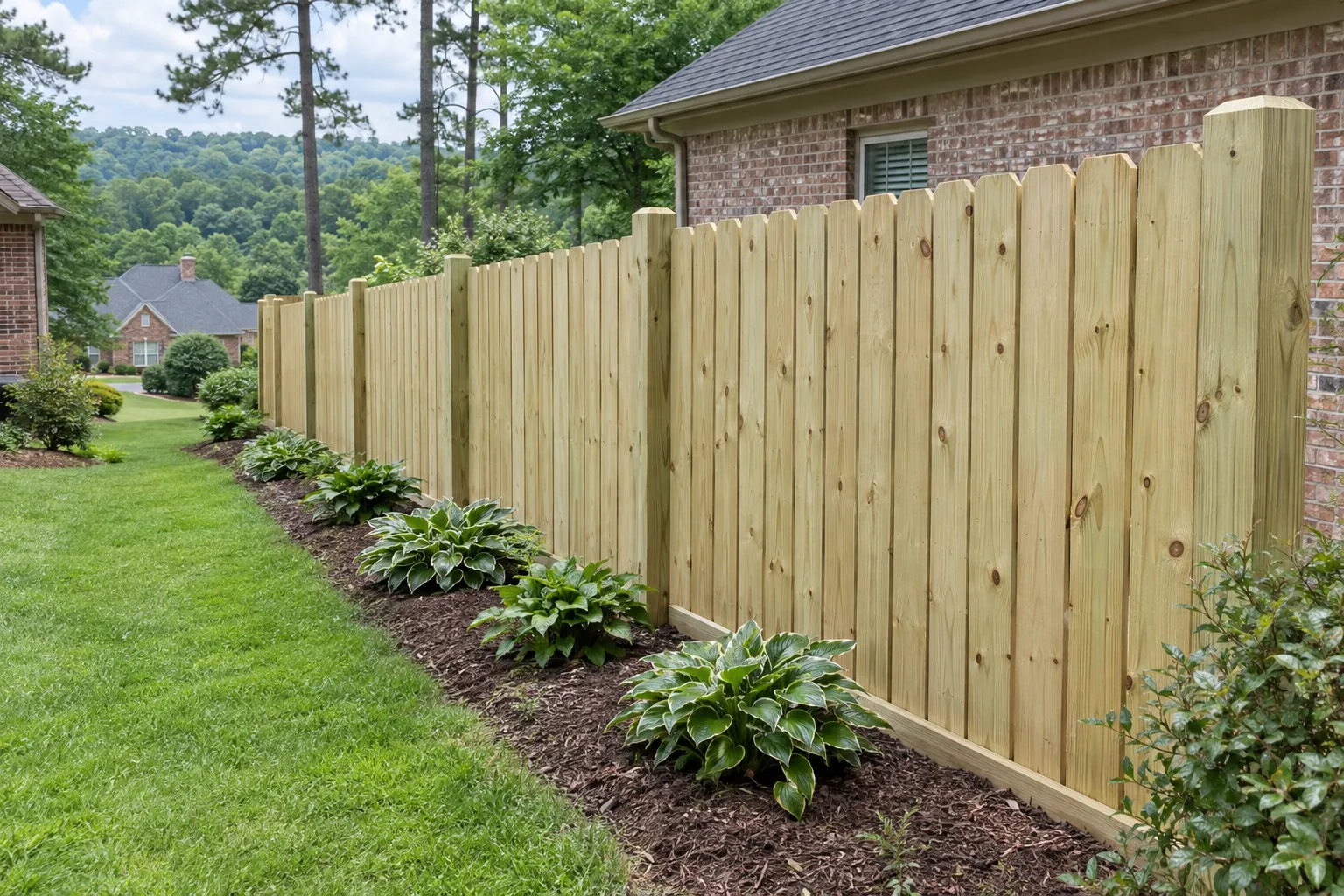
Birmingham Fence Pros is a fence company that builds wood fences across Birmingham, from flat lots in Ensley and East Lake to the steep yards under Red Mountain. Wood is still the most common fence material in town because it's affordable, easy to repair, and looks right on almost any house. This page covers how a wood fence is built: the lumber, the posts, the framing, and the fasteners. If you're mainly deciding between privacy styles and heights, see privacy fences.
Choosing the Lumber
Pressure-treated southern yellow pine
Southern yellow pine is the workhorse wood fence in Alabama. It's strong, widely available, and treated with preservative to resist rot and insects. Treated pine starts out green or tan and weathers to gray unless you stain it.
Cedar
Cedar has natural oils that resist decay, a straighter grain, and a warm color that many Over the Mountain homeowners like for front-facing fences. It costs more than pine and is softer, so it dents more easily.
Mixing the two
A common middle ground is cedar pickets on pressure-treated pine posts and rails. You get the cedar look where people see it and the strength of treated pine in the frame.
The Parts of a Wood Fence
Posts
Posts carry everything, so we treat them as the most important part of the job. We use treated posts rated for ground contact, typically 4x4 for most residential runs and heavier 6x6 posts at gates and corners. Line posts are usually spaced no more than 8 feet apart.
Post depth and footings
Birmingham's red clay holds water, and wet clay against wood is how posts rot. We dig deep, typically about a third of the post's length into the ground, and put a few inches of gravel in the bottom of each hole so water can drain away from the end grain before the post is set in concrete. The top of each footing is crowned so rain runs off instead of pooling against the post.
Rails
Horizontal 2x4 rails tie the posts together and carry the pickets. A 4 foot fence usually gets two rails; a 6 foot fence gets three so the boards stay flat and don't cup or bow in the humidity.
Pickets
Pickets are typically 1x4 or 1x6 boards, spaced apart for a picket look or butted tight for privacy. Dog-eared and flat-top pickets are the most common, with gothic and French gothic tops on decorative fences.
Fasteners
We use galvanized or coated ring-shank nails or exterior screws. Plain steel fasteners rust in Alabama humidity and leave black streaks running down the boards.
Planning a fence? Free estimates across Birmingham and nearby cities.
Building on Rock and Slopes
On the ridges around Birmingham, post holes often hit ironstone, sandstone, or chert a foot or two down. We bring rock bars and powered augers so posts still reach full depth instead of getting set shallow where the digging got hard. A shallow post is the first one to lean after a storm.
Most Birmingham yards also slope. On wood fences we usually step the panels down the hill so each section stays level, which leaves small triangular gaps under the low side of each step. Where those gaps matter for a dog, we can add a rot-resistant kickboard or follow the grade more closely.
Wind, Storms, and Rot
Severe spring and fall storms are part of life in central Alabama, and a solid wood fence acts like a sail in high wind. Deep-set posts, proper spacing, and three rails on taller fences make the difference between a fence that rides out a storm and one that lays down in the yard. Shadowbox and board-on-board styles also let some air through.
Wood that stays damp rots, so we keep pickets an inch or two off the ground and recommend sealing or staining after the new wood has had time to dry. See fence staining and sealing.
Permits and Property Lines
The City of Birmingham requires a fence permit before a fence goes up, and residential front-yard fences are limited to 4 feet. Homewood, Mountain Brook, Vestavia Hills, and other nearby cities have their own rules, and many neighborhoods add HOA requirements. We also call Alabama 811 so buried utility lines are marked before we dig a single post hole. The fence permit guide explains the details.
Questions
Common Questions
How long does a wood fence last in Birmingham?
It depends on the lumber, how the posts are set, and maintenance. Posts rated for ground contact, gravel-drained footings, and regular staining or sealing all add years.
Is cedar or pressure-treated pine better?
Treated pine is stronger and less expensive; cedar looks better and resists decay naturally. Many homeowners pick cedar pickets on treated pine posts.
How long does it take to build a wood fence?
Most residential wood fences take one to three days once materials arrive, depending on length, slope, and how much rock we hit.
How much does a wood fence cost?
Height, length, lumber, slope, and the number of gates all change the price. A free on-site estimate gives you the number, or see our fence cost guide.
Free estimate
Get a Fence Quote
Tell us what you have in mind and we'll call to set up a time to walk the fence line. Rather talk? (205) 254-6016